
Epsom salt is a documented remedy for confirmed magnesium deficiency: interveinal chlorosis on older leaves, veins staying green. It does nothing for the two far more common causes of houseplant yellowing, overwatering and plain leaf age. Here is how to tell which one you actually have before you dose.
Mira Castellanos
I keep houseplants and I read the actual studies, which is usually either a confession or a dare. If a claim isn't sourced I'll write 'gardeners report' rather than state it as fact, and if a mechanism is only partly supported I'll tell you which part. Plenty of popular plant advice does not survive that treatment.
My Garden Journal
What Epsom Salt Is Actually a Remedy For
Epsom salt is magnesium sulfate. Magnesium is the central atom of the chlorophyll molecule, and it is genuinely required for normal plant growth. When a plant is actually deficient in magnesium, Epsom salt (applied as a soil solution, documented at 25 grams per liter, roughly 4 ounces per gallon) is a real, sourced remedy, alongside crushed dolomitic limestone or a compost mulch as an organic alternative. None of that is in dispute. What is skipped in most of the houseplant-forum advice to "just add Epsom salt" is the step before dosing: confirming the plant is actually deficient in magnesium in the first place.
The Actual Tell for Magnesium Deficiency
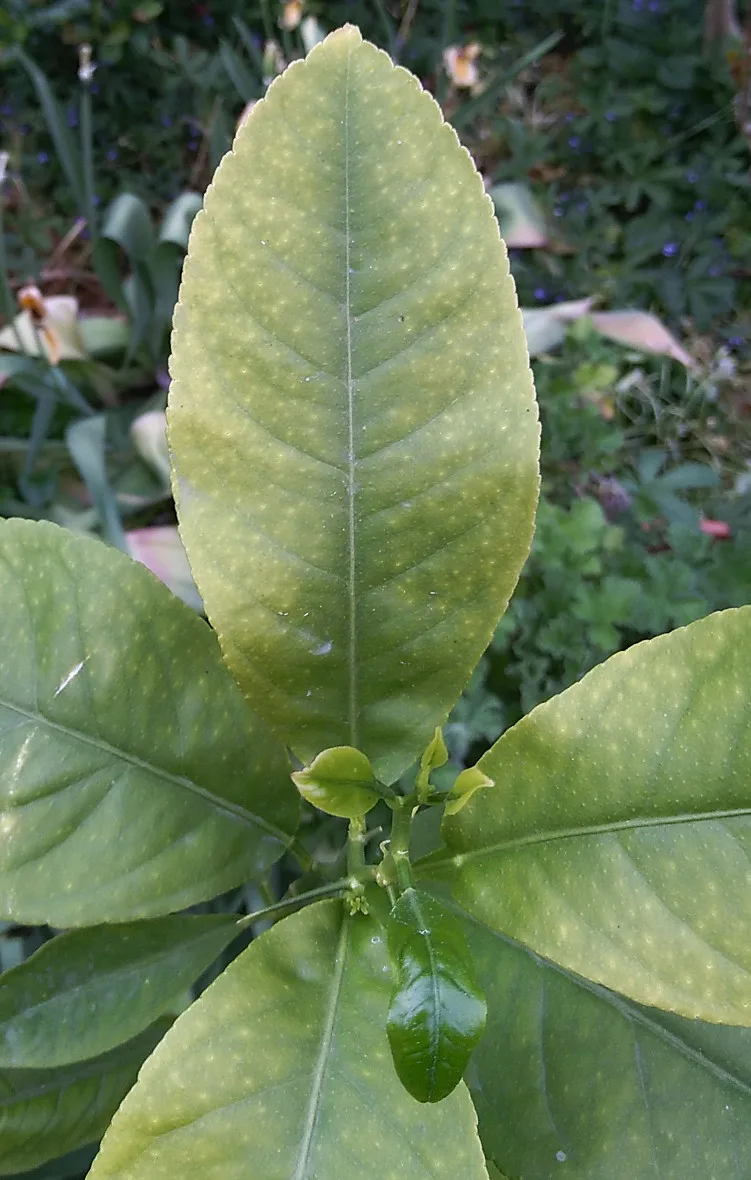
Because magnesium is mobile within the plant (phloem-mobile, in the technical term), a deficient plant cannibalizes magnesium from its older leaves and relocates it to younger leaves, which have greater photosynthetic demand. That produces a specific, recognizable pattern: interveinal chlorosis, meaning yellowing between the leaf veins while the veins themselves stay green, and it shows up on the plant's OLDER leaves first, progressing to younger leaves only as the deficiency worsens. A plant with new growth yellowing first, or with leaves yellowing solid rather than in that green-veined, marbled pattern, is very unlikely to be showing magnesium deficiency specifically.
Why Most Yellowing Is Not This
The same source is explicit that magnesium deficiency symptoms can be confused with zinc deficiency, chlorine deficiency, viral infection, or plain natural leaf aging, since all of these present with some version of yellowing. That confusability is documented. What the source does not address, and what I am stating here as my own reasoning rather than borrowing the citation for something it does not measure, is overwatering. Overwatered roots lose function and stop taking up nutrients properly, including magnesium, which can produce a yellowing pattern that resembles a nutrient deficiency without magnesium actually being scarce in the growing medium or the soil mix. In practice, overwatering and ordinary leaf age (a plant's oldest leaves yellowing and dropping on a normal schedule as it grows) account for the large majority of houseplant yellowing that gets brought to a forum asking "does my plant need Epsom salt." Dosing magnesium into a plant whose real problem is soggy roots or a leaf that was simply due to drop does not fix either issue, and in a plant that is not actually deficient, adding more salts to an already-struggling root system is not obviously harmless either.
How to Tell Which One You Actually Have
Check three things before reaching for Epsom salt. First, which leaves are yellowing: older, lower, or interior leaves are consistent with both magnesium deficiency and normal aging; new growth yellowing first points away from magnesium deficiency and toward something else (often a different nutrient, or a root problem). Second, the pattern on the leaf itself: yellowing between green veins (interveinal chlorosis) is the magnesium-deficiency tell; uniform, solid yellowing of the whole leaf is not the documented pattern for this deficiency and is more consistent with overwatering or age. Third, the soil and watering history: if the mix has been staying wet, if the pot lacks drainage, or if you have been watering on a fixed schedule rather than checking the soil, overwatering is the more likely explanation and Epsom salt will not address it. Only when older leaves specifically show that green-veined, interveinal yellowing pattern, and the watering and drainage check out, does dosing magnesium match a documented remedy to a documented deficiency.
Bottom Line
Magnesium deficiency in plants is real, has a specific documented symptom (interveinal chlorosis starting on older leaves, veins staying green), and has a documented remedy at a stated dose: Epsom salt as a soil solution, or dolomitic limestone, or compost mulch. What Epsom salt does not do is fix yellowing that is actually caused by overwatering or ordinary leaf aging, which are far more common causes of houseplant yellowing than confirmed magnesium deficiency. Check the leaf pattern and the watering history first. If the tell is not there, the fix is not Epsom salt.
Related Guides
- The Real Reasons Your Houseplant's Leaves Are Turning Yellow, the guide that ranks overwatering and leaf age above nutrient deficiency as causes, and the source for the "confirm before you dose" ordering used here.
- Do Coffee Grounds Actually Help Houseplants? What the Evidence Shows, the same "confirm what the popular remedy actually treats" investigation applied to a different claim.
- Does Misting Actually Raise Humidity for Houseplants?, the same evidence-first method applied to another popular houseplant-care habit.
FAQ
Does Epsom salt actually help houseplants?
Only if the plant has a confirmed magnesium deficiency, which shows up as interveinal chlorosis (yellowing between green veins) starting on older leaves. Epsom salt at a documented dose (25 g/L, about 4 oz/gal, as a soil solution) is a real remedy for that specific deficiency. It does not address yellowing caused by overwatering or ordinary leaf age, which are more common.
What does magnesium deficiency actually look like on a houseplant?
Yellowing between the leaf veins while the veins stay green (interveinal chlorosis), appearing on the plant's older leaves first and progressing to younger leaves as the deficiency worsens, since magnesium is mobile within the plant and gets relocated from old growth to new growth under deficiency.
How do I know if my plant's yellow leaves are from overwatering instead of a nutrient deficiency?
Check the soil and watering history first: consistently wet mix, a pot without drainage, or watering on a fixed schedule rather than by checking the soil all point toward overwatering rather than a documented nutrient deficiency. Overwatering is not addressed by the source behind this guide's magnesium-deficiency claim; it is stated here as separate reasoning, because overwatering and plain leaf age are the far more common real-world causes of houseplant yellowing.
Can too much Epsom salt hurt a plant that is not actually magnesium deficient?
This guide does not have a sourced answer to that specific question. What is documented is that Epsom salt is a remedy matched to a specific, confirmed deficiency, not a general-purpose houseplant tonic, so dosing it without confirming the deficiency first is treating a guess rather than a diagnosis.
Related Topics
Share This Guide
Related Guides
Continue learning with these related guides
Does Misting Houseplants Actually Raise Humidity? What the Physics Says
7 min read
Do Orchids Need a Cold Night to Rebloom? Rereading the Temperature Study
8 min read
Aglaonema Care India: Red & Pink Varieties, Monsoon Watering + Complete Guide
16 min read
Snake Plant at Night: What CAM Photosynthesis Actually Changes For You
7 min read
Do Coffee Grounds Actually Help Houseplants? What the Evidence Shows
5 min read
Does LECA Semi-Hydroponics Actually Prevent Root Rot? What the Evidence Shows
6 min read
Also in Indoor Plants
Do Coffee Grounds Actually Help Houseplants? What the Evidence Shows
Does the Ice Cube Watering Method Actually Hurt Orchids? What the Evidence Shows
Does LECA Semi-Hydroponics Actually Prevent Root Rot? What the Evidence Shows
The ZZ Plant "Thrives on Neglect" Myth: What the Rhizome Actually Buys You