
Stand a cut beet crown in water and leafy greens really do sprout within a week or two. What you will not get is a new beet root, ever. Here's what the water-glass trick actually produces, and why a beet's growing biology rules out a second root the same way it does for carrots.
Tom Marsh
I grow food: vegetables, herbs, fruit. I try to be honest about yield. Celery regrown from a scrap gives you one modest bonus harvest, not a new celery, and I'd rather say so than sell you the photo. When a timing or a number comes from my own kitchen rather than a source, I label it that way in the guide.
My Garden Journal
Greens Come Back. The Root Does Not.
Cut the leafy crown off a beet, keeping a little of the root shoulder attached, stand it in a shallow glass of water on a sunny sill, and new leafy greens genuinely do sprout from the center within a week to ten days. That part of the trend is real. What will not happen, no matter how long you leave it or how often you change the water, is a new beet root growing back underneath. This guide splits those two outcomes before you plan on either one.
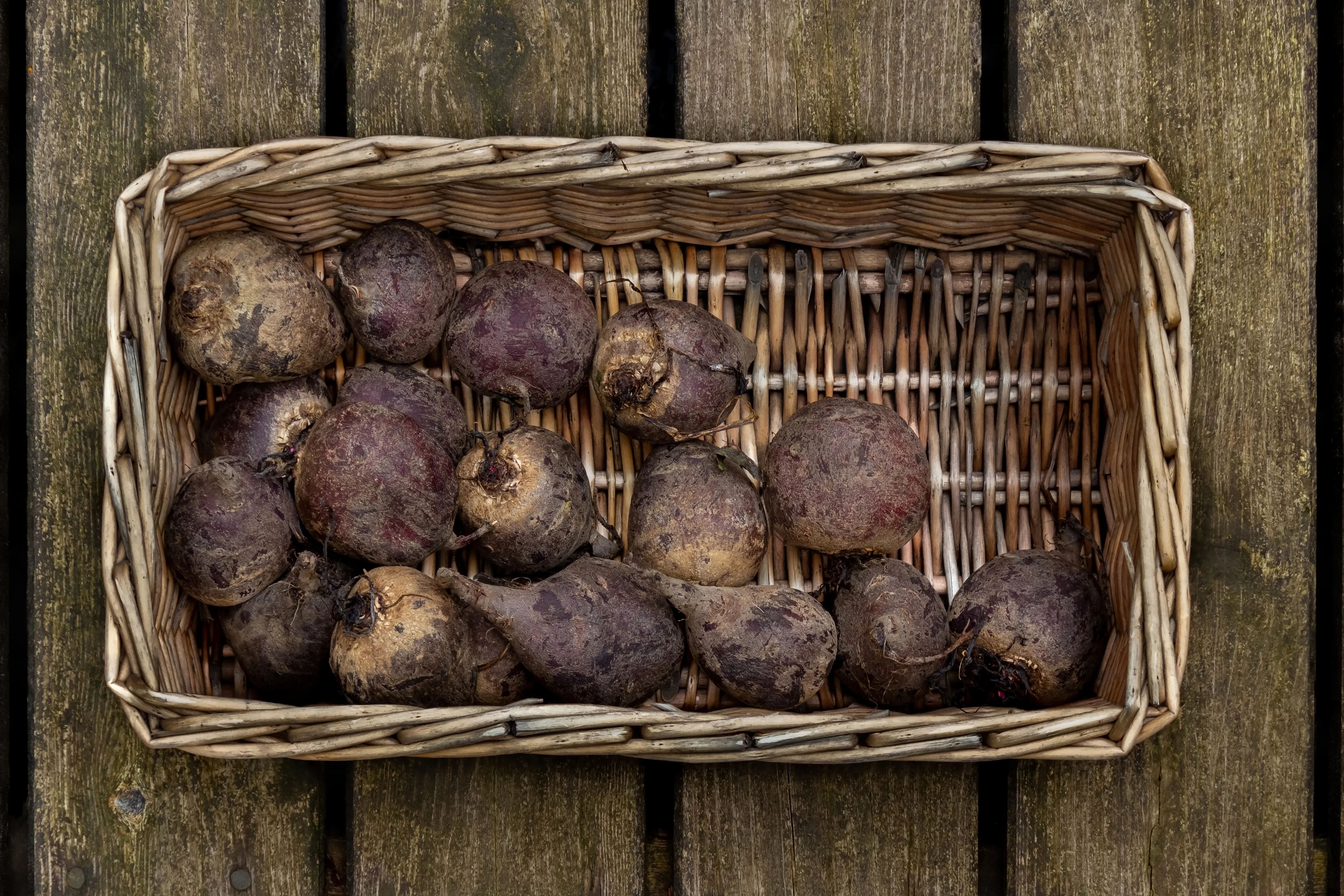
What a Real Beet Root Actually Looks Like
Per Clemson Cooperative Extension HGIC 1305 ("Carrot, Beet, Radish & Parsnip"), beets (Beta vulgaris) are a cool-season crop grown in full sun, and the root is typically harvested at 1.5 to 2 inches in diameter, roughly 50 to 70 days from seed depending on variety. That root is a single storage structure the plant builds once, from seed, over that full growing period. It's worth holding that picture next to the water glass on your counter: this is what the trick is being compared against.
Why the Greens Come Back (and the Root Doesn't)
This part is my own reasoning, not a claim from Clemson or any other extension source. I looked for a beet-specific "can you regrow beet tops in water" factsheet the way there is one for carrots, and after a real search effort, none exists. So here is the mechanism, stated as my own conclusion: cutting the crown off a beet removes the root's own growing point, the same as it does on a carrot. The surviving crown tissue is leaf-making tissue, not root-making tissue, so it can push new leafy greens from the center, but it has no dormant bud or growing point left inside it capable of rebuilding a taproot. A beet is structurally a taproot crop, same category as carrot, so I'd expect the same result: greens, not root. In my own kitchen, a healthy cut crown with the water changed every day or two shows visible new leaf growth at the center within about a week to ten days.
A beet's edible root is a single storage structure built once, from seed, and cutting the crown off does not leave behind the growing point needed to rebuild it. That's the same structural limit carrots hit, and it's a different situation from a bok choy, celery, or leek base, where a cut disc still holds a stem-like growing point that can push a genuinely new cluster of stalks or leaves.
What This Is and Isn't Worth
Worth doing: standing a cut beet crown in water for a week or two of small leafy greens you can snip for a salad or a saute, out of a scrap that was headed for the compost anyway, at zero cost. Beet greens are genuinely good eating, not just a garnish.
Not worth doing: expecting, hoping, or waiting for a new beet root to form under the water glass. Nothing about how a taproot crown works supports that outcome. If you want an actual beet harvest, that means planting beet seed and growing a full root over the 50-70 day window Clemson's factsheet describes, not restarting from a kitchen scrap.
Related Guides
- Carrot Top Regrowth From a Kitchen Scrap: What You Actually Get, the direct precedent for this guide: same top-regrowth-for-greens mechanic on a different taproot vegetable.
- Regrow Celery from Kitchen Scraps, a different mechanism worth contrasting: celery's base regrows one real stalk flush, where a beet crown only ever regrows leaves.
- Bok Choy Base Regrowth From a Kitchen Scrap: What You Actually Get, another scrap-in-water trick with a real but limited payoff.
FAQ
Will a beet crown ever regrow a new root if I just wait longer?
No, by the same taproot logic that rules it out for carrots: cutting off the crown removes the root's own growing point, and there is no evidence, or biological reason, to expect the surviving leaf-making tissue to rebuild it. More time in the water glass won't change that. (This is my own reasoning; no beet-specific source confirms or denies it directly.)
How long until the crown actually sprouts new leaves?
This is a personal observation, not a sourced figure: in my own kitchen, visible new leaf growth at the center shows up within about a week to ten days of standing a healthy crown in shallow water with regular water changes.
Is it worth doing at all if there's no root payoff?
Yes, as a small bonus. Beet greens are genuinely edible and good in a salad or sauteed, and you get a week or two of them out of a scrap that was headed for the compost anyway. Just don't plan a meal around a root that isn't coming.
What's the actual way to grow a new beet?
Plant beet seed directly and grow it out. Per Clemson HGIC 1305, expect roughly 50 to 70 days from seed to a root at harvest size (1.5 to 2 inches in diameter), depending on variety. That's the only path to an actual second beet.
Related Topics
Share This Guide
Related Guides
Continue learning with these related guides
Regrow Garlic From a Sprouted Clove: What You Actually Get
5 min read
Growing Chilli Peppers in Balcony Pots: What Actually Works in an Indian Summer
6 min read
Growing Radishes: Why Crowded Roots Never Bulb
6 min read
Regrow Celery From Scraps: What You Actually Get
5 min read
Bok Choy Base Regrowth From a Kitchen Scrap: What You Actually Get
5 min read
Carrot Top Regrowth From a Kitchen Scrap: What You Actually Get
5 min read
Also in Vegetables
Radish Top Regrowth From a Kitchen Scrap: What You Actually Get
Growing Sweet Potato Slips From a Grocery Root: What Actually Happens
Carrot Top Regrowth From a Kitchen Scrap: What You Actually Get
Regrow Ginger From a Rhizome Piece: What You Actually Get